PDRN in Skincare: What It Is and Does It Really Work?
Henk Vermeer ·
Listen to this article~6 min
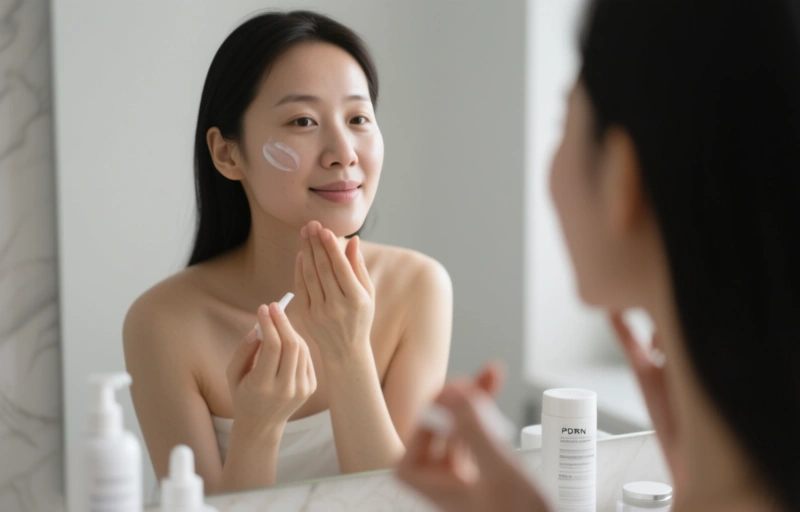
PDRN, derived from salmon sperm DNA, is a buzzy skincare ingredient promising regeneration. We break down the science, its proposed benefits for healing and anti-aging, and what professionals need to know about its real-world efficacy.
Hey there, skincare pros. Let's talk about something that's been popping up in ingredient lists and causing a bit of buzz: PDRN. You might have seen it labeled as "salmon sperm DNA extract" or "zalmsperma" and wondered what on earth it is and if it's worth the hype for your clients. I get it—new ingredients come and go, and it's your job to separate the real deal from the marketing fluff.
So, let's break it down together, no jargon, just straight talk. Think of this as our coffee chat about whether this ingredient deserves a spot in your treatment room.
### What Exactly Is PDRN?
PDRN stands for Polydeoxyribonucleotide. That's a mouthful, right? In simple terms, it's a chain of DNA fragments. In skincare, it's most commonly derived from salmon sperm—hence the name zalmsperma, which is Dutch for salmon sperm. Now, before anyone gets squeamish, the extraction process purifies it extensively. The end goal is to harness these DNA building blocks for their potential regenerative properties.
The core idea is that these fragments can signal the body's own repair mechanisms. It's like giving your skin's cellular communication system a nudge, telling it to kickstart healing and regeneration processes that naturally slow down with age or damage.
### How Is It Supposed to Work in Skincare?
The proposed mechanism is fascinating. PDRN is believed to act on the adenosine A2A receptor. Activating this receptor is thought to promote tissue repair, reduce inflammation, and stimulate the formation of new blood vessels (a process called angiogenesis). For skin, this could translate to several potential benefits:
- **Enhanced Wound Healing:** Accelerating recovery post-procedure, like microneedling or laser treatments.
- **Anti-Inflammatory Effects:** Calming redness and irritation, which is huge for sensitive or post-treatment skin.
- **Collagen Stimulation:** Supporting the skin's framework to improve firmness and reduce the appearance of fine lines.
- **Improved Skin Barrier Function:** Helping the skin better retain moisture and protect itself from environmental stressors.
It sounds promising on paper, doesn't it? The theory is that by supporting the skin's natural repair shop, you get healthier, more resilient skin over time.
### Does the Science Back It Up?
This is the million-dollar question. Here's where we need to look at the research. Most of the clinical studies on PDRN have been in the medical field, focusing on wound healing for ulcers, burns, and tendon injuries. The results there have been generally positive.
For topical skincare applications, the research is more limited but growing. Some studies, often sponsored by manufacturers, show improvements in skin hydration, elasticity, and wrinkle depth. However, the beauty industry is notorious for having smaller, shorter-term studies. We're still waiting for more large-scale, independent, long-term trials specifically on cosmetic formulations.
One thing to note is the molecular size. DNA fragments are large. For topical application to be effective, the formulation is key. The product needs to be designed to help these molecules penetrate the skin's barrier effectively. This is why you often see PDRN in serums or treatments paired with delivery technologies like microneedling or iontophoresis in professional settings.
### What Should You Look For in a Product?
If you're considering adding a PDRN product to your professional arsenal or recommending one, here are a few practical points:
- **Concentration:** Look for products that disclose the PDRN concentration. It's often measured in micrograms per milliliter (µg/mL). There's no universal "gold standard" dose yet, but transparency is a good sign.
- **Formulation:** Serums and ampoules are common carriers. Check the rest of the ingredient list. Is it paired with other supportive ingredients like hyaluronic acid for hydration or peptides?
- **Source and Purity:** Reputable brands should be able to provide information on the source and their purification process.
- **Client Suitability:** It's often marketed for anti-aging, sensitive, or post-procedure skin. Always patch test, as with any new active.
As one dermatologist researcher noted, "The potential of PDRN lies in its biological signaling, not as a direct moisturizer or exfoliant. Its value is in supporting the skin's intrinsic health."
### The Bottom Line for Professionals
So, does it really work? The early evidence and mechanistic science are compelling enough to take it seriously, but it's not a magic bullet. It shows genuine promise as a supporting actor in a comprehensive skincare regimen, particularly for healing and rejuvenation.
Your clients might ask about it. My advice? Be cautiously optimistic. It's a sophisticated ingredient with a interesting biological rationale. It likely works best for specific concerns like post-procedure recovery or as part of a long-term anti-aging strategy focused on skin health, not just surface-level correction.
Don't throw out your retinoids or vitamin C just yet. Think of PDRN as a potential new tool in your kit—one that works from the inside out by talking to the skin's own repair cells. As always, managing client expectations is key. Frame it as a nutrient for skin resilience, not an overnight miracle.
The field of cosmeceuticals is always evolving, and PDRN is a fascinating chapter. Keep an eye on the research, ask brands tough questions about their formulations, and trust your professional judgment on what delivers real results for the faces in your chair.