TikTok's Skincare Trend: Should You Eat It Too? Expert Weighs In
Henk Vermeer ·
Listen to this article~4 min
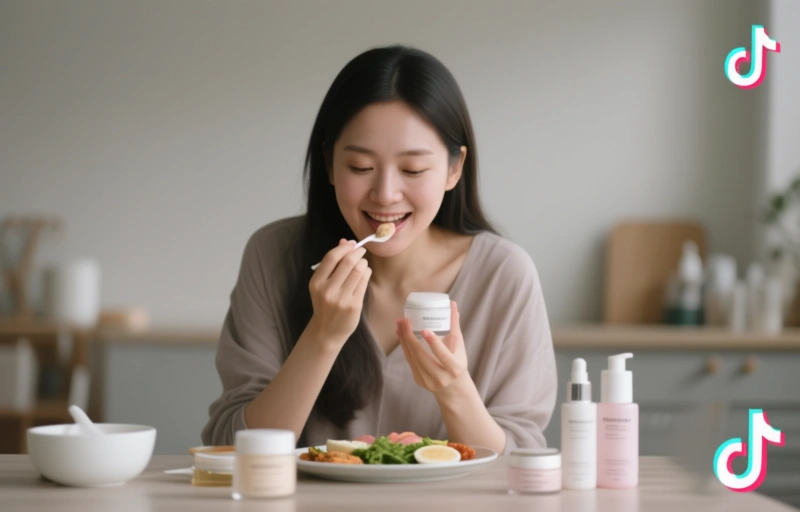
TikTok says to eat your skincare for better results. We asked a dermatologist to separate fact from fiction and explain what truly works for skin health from the inside out.
So, you've seen those videos, right? The ones flooding your TikTok feed, telling you that the secret to glowing skin isn't just what you put on it, but what you put in your mouth. It's a catchy idea: eat your skincare. But as a professional, you know trends come and go faster than you can say 'hyaluronic acid.' Let's cut through the noise and see what's actually worth your attention.
We sat down with a leading dermatologist to get the real scoop. Because when your clients are asking about the latest viral advice, you need to be armed with facts, not just fun filters.
### The Core Claim: Nourishment from the Inside Out
The basic premise isn't entirely new. The concept that diet affects skin health is dermatology 101. These TikTok trends, however, often take it to a literal extreme. We're talking about people blending serums into smoothies or suggesting you can substitute a vitamin C serum with a glass of orange juice.
Our expert was quick to draw a clear line. "Topical application and dietary intake serve two fundamentally different purposes," she explained. "Think of it like this: applying sunscreen protects your skin's surface from the outside. Eating carrots, which contain beta-carotene, may provide some internal antioxidant support. They work together, but one does not replace the other."
### Where Nutrition Actually Makes a Difference
This doesn't mean diet is irrelevant. Far from it. For professionals advising clients, focusing on foundational nutrition is far more valuable than chasing edible skincare fads. Here’s what truly supports skin health from within:
- **Antioxidants:** Foods like berries, dark leafy greens, and nuts combat free radicals from pollution and UV exposure.
- **Healthy Fats:** Avocados, olive oil, and fatty fish help maintain the skin's lipid barrier, keeping it hydrated and plump.
- **Collagen Support:** While eating collagen peptides might not directly translate to new facial collagen, foods rich in Vitamin C (like bell peppers and citrus) and protein are essential for its production.
- **Hydration:** This one's simple but non-negotiable. Water is crucial for every cellular function, including skin cell turnover.
The expert put it plainly: "A consistent, balanced diet is the best 'edible skincare' regimen. No single superfood will erase wrinkles or cure acne overnight, but a pattern of healthy eating creates the optimal internal environment for skin to thrive."
### The Professional's Verdict on Viral Trends
As a face care pro, your role is to be the trusted filter. When clients ask about these trends, here’s a practical approach:
First, acknowledge the curiosity. It shows they're engaged in their skin health. Then, pivot to education. Explain the science of skin absorption versus digestive processing. A moisturizer with ceramides is designed to repair the barrier on the stratum corneum. Eating ceramides? They’ll be broken down by stomach acids long before they reach your skin.
Our dermatologist offered this final thought, which really stuck with me: "The most powerful tool in skincare is consistency, not novelty. A simple, effective topical routine paired with a generally healthy lifestyle will outperform any fleeting, extreme trend every single time."
Your clients look to you for clarity. By understanding the kernel of truth within these viral moments—like the importance of overall wellness—you can provide guidance that’s both reassuring and scientifically sound. That’s how you build lasting trust, one sensible skincare conversation at a time.