Teens Overdoing Skincare? 12 Products Causing Skin Issues
Henk Vermeer ·
Listen to this article~4 min
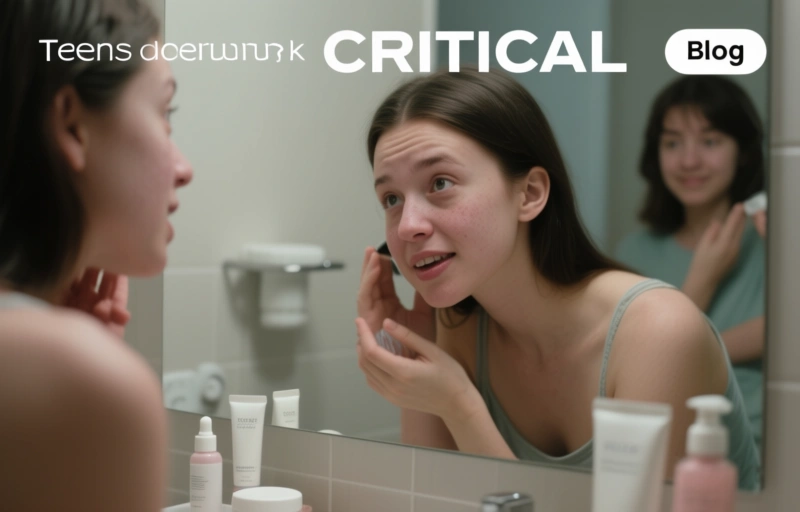
Teens are using up to 12 skincare products daily, causing rashes and breakouts. Learn how professionals can guide them to simpler, healthier routines.
You've probably seen it in your practice: young girls walking in with irritated, red, or even broken-out skin. Not because they're neglecting their routine, but because they're doing too much. A recent report highlighted a worrying trend: teens, especially girls, are slathering on up to 12 different skincare products daily. And their skin is fighting back.
Instead of that dewy, flawless look they're chasing, they're getting contact dermatitis, clogged pores, and a compromised skin barrier. It's a classic case of "more is not better." Let's break down what's happening and how you, as a professional, can guide them back to healthier skin.
### Why 12 Products is a Problem
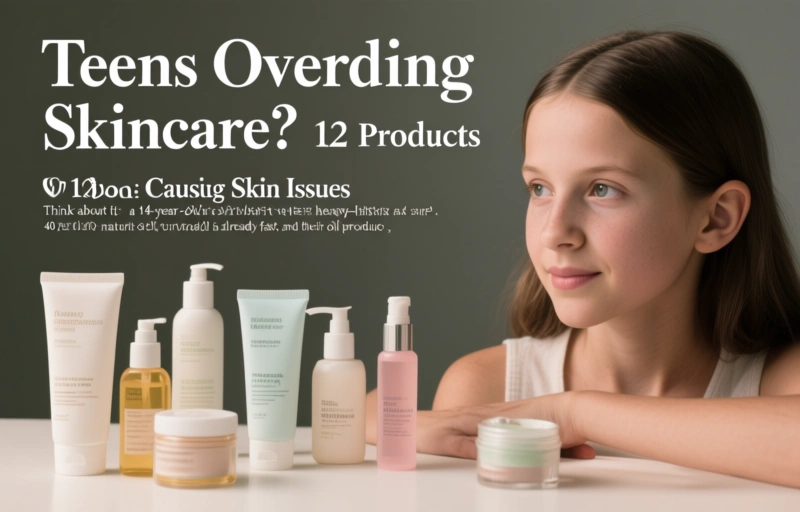
Think about it: a 14-year-old's skin doesn't need the same heavy-hitting routine as a 40-year-old's. Their natural cell turnover is already fast, and their oil production is often at its peak. Piling on multiple serums, acids, and moisturizers can overwhelm the skin.
Here's what typically happens:
- **The moisture barrier gets damaged.** Over-exfoliation from acids and retinoids strips away natural oils.
- **Ingredients start to clash.** Mixing certain active ingredients (like retinol and vitamin C, or multiple acids) can cause irritation.
- **The skin becomes sensitized.** Everything stings, and redness becomes the new normal.
It's like trying to fix a small leak in a pipe by throwing a dozen different tools at it. You end up making a bigger mess.
### The Real Cost of Overdoing It
These young clients are often spending a lot of money on products they don't need. We're talking $50 to $150 a month on serums, masks, and spot treatments. All for skin that's getting worse, not better.
A simple, targeted routine is usually more effective and way more affordable. Think a gentle cleanser, a basic moisturizer, and sunscreen in the morning. At night, maybe a single active ingredient if needed.
### What You Can Do: A Professional's Guide
When a teen comes to you with this issue, here's a solid starting point:
1. **Stop everything.** For at least 5-7 days, have them use only water or an ultra-gentle, non-foaming cleanser and a basic moisturizer. No actives, no exfoliation.
2. **Rebuild the barrier.** Look for products with ceramides, niacinamide, or squalane. These help repair the skin's natural protection.
3. **Reintroduce slowly.** After the skin calms down, add back only one product at a time. Start with a low-concentration active, like 2% salicylic acid or a gentle retinol, used just 2-3 times a week.
4. **Educate on the "less is more" philosophy.** Explain that healthy skin doesn't need a 12-step routine. It needs consistency and patience.
> "I see so many young girls who think they need a different product for every little concern," says one dermatologist. "The truth is, a simple routine that respects the skin barrier often works better than a cabinet full of fancy serums."
### Key Signs of Overdoing It
Help your clients recognize these red flags:
- **Tightness or stinging** after washing.
- **Persistent redness** that doesn't fade.
- **Small, rough bumps** (not pimples) on the forehead or cheeks.
- **A sudden breakout** after starting a new product.
If they check any of these boxes, it's time to simplify.
### The Bottom Line for Professionals
You're in a unique position to stop this cycle. By guiding young clients toward a minimal, effective routine, you're not just fixing their skin. You're teaching them healthy habits that will serve them for years. And that's a win for everyone.
Remember: healthy skin is the goal, not a perfect complexion. And healthy skin rarely needs more than a few good products.