Kids' Skincare Boom: The One Aging We Can Prevent
Henk Vermeer ·
Listen to this article~4 min
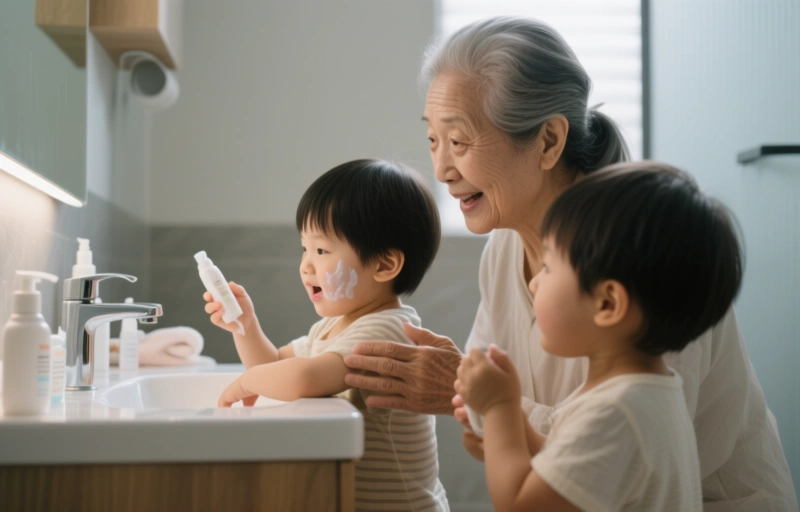
The rise of elaborate skincare routines among children raises concerns. Face care professionals must guide young clients toward sun protection and simple habits, not anti-aging anxiety.
There's a new trend sweeping through playgrounds and middle schools, and it's not the latest video game or social media app. It's skincare. Kids as young as eight or nine are asking for serums, retinols, and elaborate multi-step routines. As a face care professional, you've probably seen this shift firsthand. Parents are coming to you with questions, and sometimes, with concerns.
It's a fascinating development, really. On one hand, it's great to see young people taking an interest in skin health. On the other, it raises some serious questions. Are these products appropriate for developing skin? What's driving this trend? And most importantly, what's our role as professionals in guiding these young consumers and their families?
### Understanding the Social Media Influence
Let's be honest, we know where this is coming from. TikTok, Instagram, YouTube—these platforms are flooded with skincare content. Young influencers, often teenagers themselves, showcase elaborate routines with 10 or 12 products. The messaging is often about anti-aging, fighting wrinkles, and achieving "glass skin." For a child, this can create anxiety about normal skin changes that are years, even decades, away.
It's not just about the products themselves. It's about the mindset they promote. When a 10-year-old is worried about "preventing aging," we have to pause and ask what aging even means to them. Their skin is still building its natural barrier. It's resilient, but it's also sensitive to harsh actives.
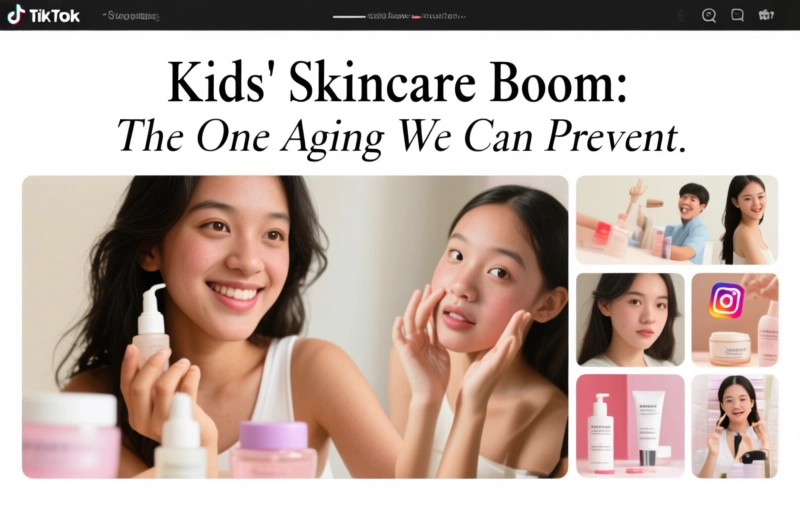
### The One Type of Aging We Should Focus On
Here's the thing. In all this conversation about skincare for kids, there's a crucial point that often gets lost. As one expert recently put it, **"There's only one type of aging we can actually prevent."**
That type isn't chronological aging. We can't stop time. The aging we can prevent is photoaging—the damage caused by sun exposure. This is where our professional guidance becomes invaluable. Instead of pushing complex anti-aging regimens on young skin, we should be emphasizing:
- Daily broad-spectrum sunscreen (SPF 30 or higher)
- Protective clothing like hats and long sleeves
- Seeking shade during peak sun hours (10 AM to 4 PM)
- Reapplying sunscreen every two hours during outdoor activities
These habits, established young, offer real, measurable protection. They prevent the cumulative sun damage that leads to premature aging and, more importantly, skin cancer later in life.
### Building Healthy Foundations, Not Anxiety
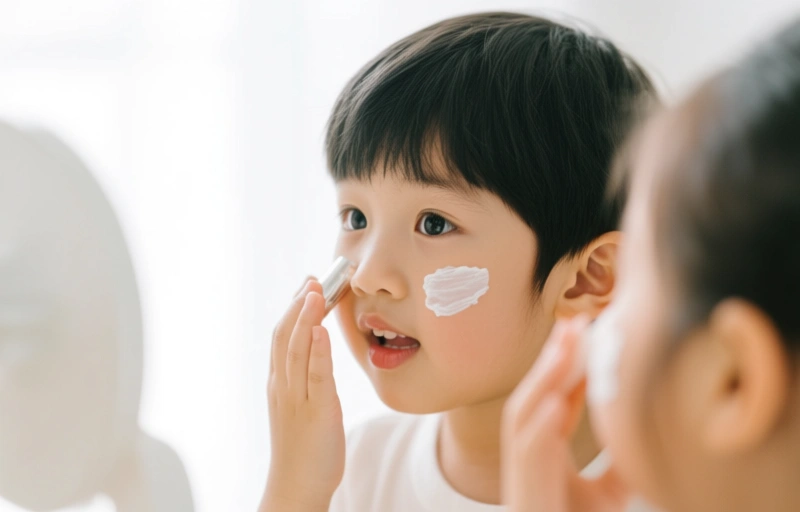
So what does appropriate skincare for kids look like? It's simpler than you might think. A gentle routine that supports their skin's natural development without overwhelming it. Here's a basic framework you can recommend to parents:
- A mild, fragrance-free cleanser for morning and night
- A simple moisturizer if their skin tends to be dry
- That daily sunscreen we talked about
- Maybe a lip balm with SPF protection
That's it. No acids, no retinoids, no intensive treatments. The goal isn't to create a perfect complexion by middle school. It's to establish habits that support lifelong skin health without creating unnecessary anxiety about appearance.
### Our Role as Professionals
This trend presents both a challenge and an opportunity for face care professionals. We're seeing clients younger than ever before. This means we need to adjust our approach. Our consultations might need to include more education about skin development. We need to be prepared to gently steer young clients and their parents away from inappropriate products, even if they're popular on social media.
We can be the voice of reason in a noisy digital landscape. We can explain why a $80 vitamin C serum isn't necessary for a 12-year-old. We can recommend products that are actually formulated for young skin. Most importantly, we can shift the conversation from anti-aging to skin health.
Because here's the truth—healthy habits formed in childhood last a lifetime. Teaching a kid to wear sunscreen every day does more for their future skin than any trendy serum ever could. And that's a message worth sharing, one young client at a time.