Fading Hormonal Hyperpigmentation Without Lasers
Henk Vermeer ·
Listen to this article~4 min
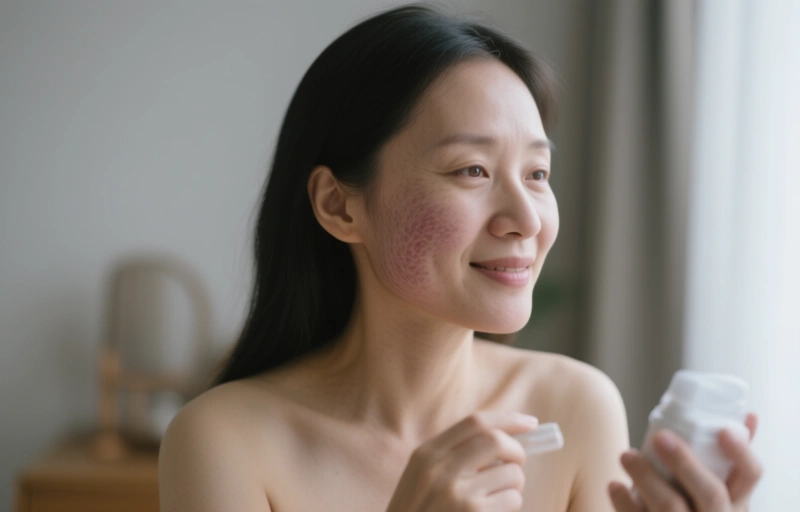
An esthetician with 40 years of experience shares how she faded severe hormonal hyperpigmentation (melasma) without lasers, using a gentle barrier-first approach and a focused at-home routine.
As an esthetician with nearly 40 years under my belt, I've learned that the best results come from being part of a client's journey. That means hands-on professional treatments paired with a simple, focused skincare routine tailored to their skin type. I call it an "Action Plan" — and it keeps the progress going at home.
I'm kicking off a new series called "How I Did This," where I spotlight a client who tried everything but got nowhere. She had a fire in her skin that no one could put out — until she trusted me. Hormonal hyperpigmentation is one of the toughest concerns to treat, so let's dive into how I turned things around for her.
### Meet Natalie
Natalie first came to see me back in 2013. We worked out at the same gym, and after multiple pregnancies, she was left with years of hyperpigmentation — blotchy brown patches (melasma) covering her face. By the time she sat in my treatment chair, she was exhausted and honestly, defeated.
### Assessing Her Skin
I start every consultation with what I call "fingertip forensics." I'm like a detective — touching, feeling, and asking tons of questions until I get to the bottom of things. Natalie's pigmentation was deep, her skin barrier was dry and compromised, and her complexion looked dull. She'd lost her glow. She'd tried a few facials and light peels, but nothing worked.
### The Action Plan: Put the Fire Out
Here's the thing about hyperpigmentation: being too aggressive can keep pigment cells awake. It's like poking a fire — the more you do, the worse it gets. These cells are sensitive to heat, aggression, and trauma. So my approach is always to "put the fire out" first. The goal was to get her skin barrier healthy so we could safely introduce stronger treatments to remove the stubborn pigment. Once I felt her barrier rebuilding, we added brightening actives very carefully.
At home, as a skin type #6, her job was to follow the Action Plan: keep things calm, stay consistent, and wear vitamin C, sunscreen, and foundation makeup every single day. That put her skin on "lockdown" to block UV rays from undoing our progress.
### What I Did in the Treatment Room (2013)
Natalie came to me in 2013, so these are the tools and techniques we had back then. Every two weeks, we used a 20% salicylic acid peel, followed by Bio Brasion (a modern microdermabrasion for physical exfoliation), and finished with a leave-on retinol cream. This combo did three things:
- The acid peel dissolved surface pigment cells — gentle but powerful enough to avoid inflammation.
- The Bio Brasion lifted and pulled off stained cells.
- The retinol cream kept her skin shedding for 2-3 days after.
Results vary for everyone. Natalie saw amazing results, but there's no guarantee your skin will respond the same way.
### Her At-Home Routine
She followed the plan for skin type #6 exactly. In the morning, cleansing and treating are essential for that glow.
- Step 1: Cleanse with Mint Renewal Cleanser
- Step 2: Energy Boosting Toner
- Step 3: Vitamin C & E Treatment
- Step 4: Weightless Protection SPF 30
> "The more you try to control hyperpigmentation, the worse it can get. So we put the fire out first."
This approach took patience, but it worked. Natalie's skin transformed — no lasers needed.