The Alarming Rise of Skincare in Young Children
Henk Vermeer ·
Listen to this article~4 min
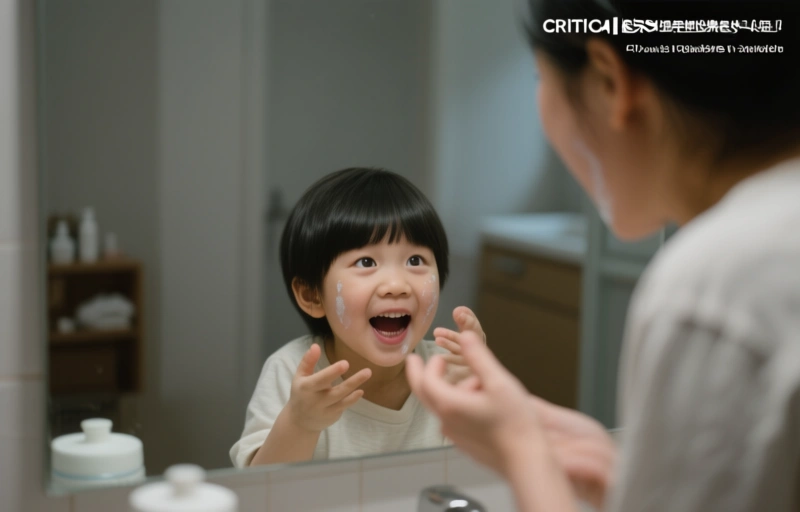
The rise of complex adult skincare routines among young children is a worrying trend. Professionals emphasize that for developing skin, the focus must be on sun protection and gentle care, not anti-aging products that can cause harm.
You've probably seen it, scrolling through social media. Kids, some as young as eight or nine, are posting elaborate skincare routines. It's a trend that's exploded, and honestly, it's got a lot of us professionals concerned. We're talking about complex regimens with serums, acids, and retinols designed for mature skin, not for someone whose biggest worry should be remembering their homework.
It feels like a new kind of peer pressure, doesn't it? The pressure to have perfect, poreless skin before you even hit puberty. But here's the thing we need to remember, and what we should be telling parents and young clients: there's only one type of aging we can actually fight against at that age.
### Understanding Premature Aging vs. Natural Aging
When we talk about anti-aging in a professional context, we're usually targeting extrinsic aging. That's the damage caused by external factors. For young skin, the single most important factor is sun exposure. Up to 90% of visible skin aging is attributed to sun damage. That's the one kind of aging we can, and must, work to prevent from the very start.
Intrinsic aging, on the other hand, is genetic. It's your biological clock. No $50 serum or fancy gadget is going to stop that process. For a child or teen, their skin is already at its peak of collagen production and cell turnover. Slapping on adult-strength anti-aging products isn't just unnecessary; it can be actively harmful.
### The Real Risks for Young, Developing Skin
This isn't just about wasting money on products that don't do anything. We're seeing real consequences. Young skin barriers are more delicate. Using potent actives like retinoids, high-percentage AHAs/BHAs, or strong vitamin C can lead to:
- Severe irritation, redness, and dermatitis
- Compromised skin barrier function, leading to sensitivity
- Increased sun sensitivity, ironically making sun damage more likely
- Throwing off the skin's natural microbiome
It creates a cycle where the skin becomes reactive, leading kids to use even more products to fix problems they didn't have in the first place. Their routine should be simple, not a 10-step process copied from an influencer.
### What Should a Young Skincare Routine Look Like?
As professionals, our guidance should be clear, simple, and science-backed. For pre-teens and young teens, a healthy routine is incredibly basic. Think of it as building a foundation for a lifetime of good habits, not fighting wrinkles that don't exist yet.
- **Cleanser:** A gentle, pH-balanced face wash. Nothing stripping.
- **Moisturizer:** A simple, fragrance-free lotion or cream to support the skin barrier.
- **Sunscreen:** This is the non-negotiable superstar. A broad-spectrum SPF 30 or higher, every single day, rain or shine. This is the ultimate anti-aging step.
That's it. Maybe a spot treatment for the occasional pimple, but that's the core. The goal is health, not perfection. We need to shift the conversation from anti-aging to skin health and protection.
One expert put it perfectly: *"The best investment in your skin's future isn't an expensive serum at age 12. It's a bottle of sunscreen and the habit of using it every morning."*
Our role is to educate. We need to talk to parents about what's happening online and empower them with facts. We should be the voice of reason, cutting through the marketing hype and social media noise. Let's champion simplicity and safety. Let's teach kids that caring for their skin is about health and hygiene, not about achieving an airbrushed, filter-ready complexion. Their skin has a whole lifetime ahead of it; let's not rush the process.